

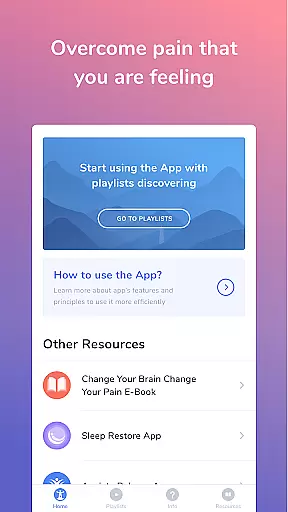
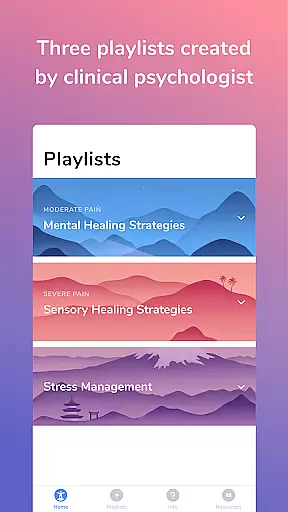
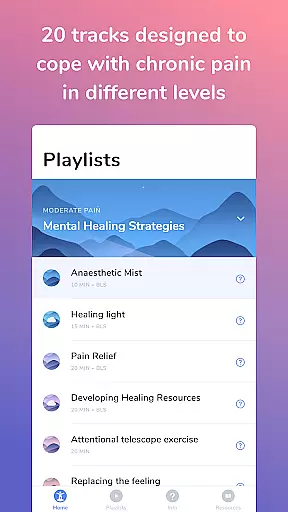

Overcoming Pain based on EMDR is a specialized mobile application designed to help users manage chronic pain and severe stress. Developed by Mark Grant, an Australian psychologist and researcher, the app incorporates recent discoveries from brain science, particularly bilateral stimulation (BLS) derived from Eye Movement Desensitization and Reprocessing (EMDR). The app features three distinct playlists: Mental Healing Strategies for mild to moderate pain, Sensory Healing Strategies for more severe discomfort, and Stress Management to reduce overall stress levels that can exacerbate pain.
The app's unique approach combines focused attention with sensory stimulation to alter physical, emotional, and cognitive processes associated with chronic pain. It is best used in a quiet environment where users can listen to tracks with headphones or earbuds without feeling overwhelmed by stress or physical discomfort. While it serves as a valuable resource, it should complement rather than replace professional medical advice or treatment.
Overcoming Pain based on EMDR is ideal for individuals seeking non-pharmacological methods to manage their pain and stress. By regularly engaging with the app's content, users can potentially decrease pain-related activity in their bodies and brains, leading to improved well-being and quality of life.
One of the standout features of Overcoming Pain based on EMDR is its three specialized playlists, each designed with different therapeutic goals in mind. The Mental Healing Strategies playlist helps alleviate mild to moderate chronic pain through guided mental exercises. For more severe pain, the Sensory Healing Strategies playlist provides techniques that require external materials and preparation, offering deeper relief when traditional methods are less effective. Lastly, the Stress Management playlist focuses on reducing stress levels that can maintain and worsen chronic pain.
The app leverages bilateral stimulation (BLS), a technique derived from EMDR, which uses sensory stimulation alongside focused attention to change the physical, emotional, and cognitive processes linked to chronic pain. This method has been scientifically studied for its efficacy in treating chronic pain. Users are encouraged to listen to tracks incorporating BLS using headphones or earbuds for optimal results.
Additionally, the app includes supplementary resources such as articles about EMDR, chronic pain, and the healing effects of bilateral stimulation. Users can also access information about Mark Grant's book, 'Change Your Brain, Change Your Pain,' which offers further insights into managing chronic pain effectively.
Personalized planning in the context of the Overcoming pain based on EMDR app refers to the tailored approach users can take to manage chronic pain and stress. This app offers three distinct playlists, each designed with a specific goal in mind to cater to varying levels of pain and stress.
The Mental Healing strategies playlist is aimed at alleviating mild or moderate chronic pain, providing users with techniques that they can apply according to their individual needs. For more severe pain, Sensory Healing strategies are available, which require external materials and preparation, offering an alternative when traditional mental strategies may not be feasible.
Stress Management is another crucial component, focusing on reducing stress that can maintain and exacerbate chronic pain. By regularly engaging with these tracks, especially when pain is tolerable, users can decrease overall stress levels and diminish pain-related activity in the body and brain.
This personalized approach empowers users to choose the most appropriate strategy depending on their current state, ensuring that each individual can create a plan that works best for them, leading to improved well-being and potentially less reliance on medication.
Progress visualization within the Overcoming pain based on EMDR app involves tracking one's journey through the management of chronic pain and stress. While the app itself does not provide explicit charts or graphs, the structured nature of its playlists allows users to perceive their advancement as they move from more intensive sensory strategies to mental healing techniques.
Users can monitor their response to different strategies over time, noting which methods are most effective for their pain relief. The transition from needing Sensory Healing strategies to benefiting from Mental Healing strategies serves as a form of progress visualization, indicating an improvement in the user's ability to manage pain.
Additionally, by listening to Stress Management tracks regularly, users can observe a reduction in their overall stress levels, which correlates with decreased pain-related activity in the body. This form of visualization helps reinforce the benefits of consistent application use and encourages continued engagement with the app's resources.
By recognizing patterns in their pain management and observing tangible improvements, users gain motivation and insight into their healing process, making progress visualization an integral part of the personalized pain management experience offered by the app.
User-friendly interface
Scientifically-backed techniques
Comprehensive pain management
Includes supplementary resources
Portable and accessible anytime
Requires quiet environment
Some features need preparation
Not a substitute for professional care
Limited to chronic pain and stress
Headphones required for full effect

Optimization for TRT & Enhanced Athletes
 4.3
4.3
Effortlessly and naturally release anxiety by harnessing the power of your brain
4.60
When the night comes, we prepare your eyes for deep, sweet dreams
4.70
Use your watch as a bike computer, heart rate monitor and cycling power meter
2.50
Walk. Earn: Get rewarded for every step! Walk, move, and earn real rewards.
4.70
FitCloudPro takes care of your health every minute.
3.70
beat yesterday.
4.00
Monitor blood sugar, gain insights, and manage diabetes with ease.
3.20
Scan food & cosmetic products and evaluate their impact on your health
4.80
Power-lifting, weightlifting and Wendler 531 app to track your workout program.
4.90
A brain game that moves you
4.70
Load the bar with this barbell & plate calculator. It's leg day, not brain day!
4.70
You deserve easy access to important insurance information. Download for FREE.
4.70
Your AI pet BFF. Talk, play, and beat anxiety in this calming game.
4.60
Personal Measurements - Track your gains!
4.50
Download MadMuscles to start your positive body transformation!
4.30
Pack of 66 calming lullabies for smooth fall asleep and relaxation
4.10
Your Health Has Met Its App (℠)
3.90
Find Paid Clinical Trials In Your Area
3.70


User Reviews